Niangniang
- Say it
- NYAHNG-nyahng
- Literally
- Lady (honorific; also an old word for mother)
- In a scene
- "Niangniang, His Majesty is on his way." (subtitled "Your Highness, His Majesty is on his way.")
- Category
- Palace ranks
Niangniang is how people speak to an empress or a senior consort. Servants, eunuchs, officials, and lower-ranking women all use it, often with the consort's title in front: "Empress niangniang," "Consort Xian niangniang." Subtitles often translate it as "Your Highness," "Your Majesty," or "my lady."
The word also has an older meaning of mother or goddess, and it's used for female deities in folk religion. In a palace setting, it marks someone at the top of the inner court's hierarchy.
It's the outward-facing partner of bengong: a consort refers to herself as bengong, and everyone below her calls her niangniang. Listening for who uses which term tells you a lot about rank. A newly promoted consort hearing niangniang for the first time is a classic palace-drama moment.
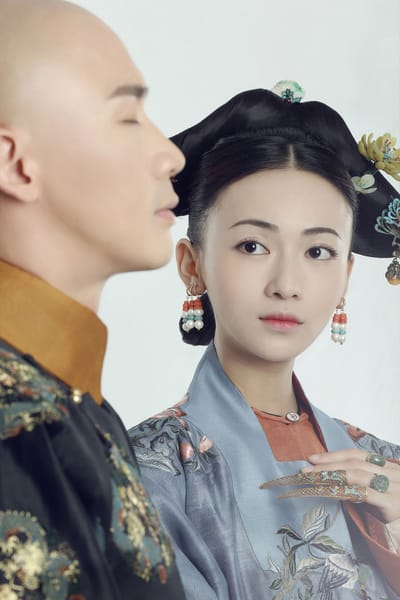
In Story of Yanxi Palace, set in the Qing court, the word is everywhere, because almost every scene involves a maid or eunuch addressing a consort. Nirvana in Fire and Story of Kunning Palace use it for empresses and consorts in their fictional courts.
The emperor is never called niangniang. In Qing-set dramas he is addressed as huangshang, while other periods use different forms.