Ask a longtime C-drama fan for a recommendation, and one of the first questions you'll hear is "Do you mind a sad ending?" Endings carry a lot of weight in Chinese dramas. Some genres are known for heartbreak, some dramas end differently from the novels they're based on, and fans have built a whole vocabulary to talk about it. This guide explains that vocabulary and how to use our ending labels without spoiling anything.
Looking for one drama's ending?
If you came here to find out whether a particular drama ends happily, its own page answers that, with the answer hidden until you choose to reveal it. These are the endings readers ask us about most right now:
- As Promised ending: whether the palace maid and the prince break their 33-life loop
- What If ending: how each of the heroine's two lives turns out
- Ancient Bracelet ending: where the healer and the king end up after three lifetimes
- The Vanishing Beauty ending: what happens to Yu Meng and her husband
- Where the Mask Ends ending: how it ends for the stand-in bride and her husband, and what happens to the impostor
- The Lament of Autumn ending: how the war ends for the leads, and how the drama changes the novel's ending
- Small Town Remedy ending: whether the surgeon stays in his hometown, and who leaves for Beijing
- My Loong ending: whether the dragon comes back to the girl who freed him
Every completed drama we cover is in our endings database, sorted by ending type.
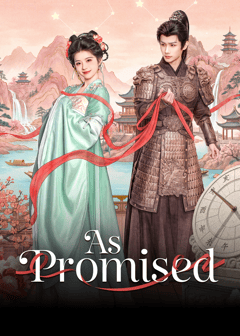 As Promised2026 · 24 eps
 What If2024 · 20 eps
 Ancient Bracelet2026 · 24 eps
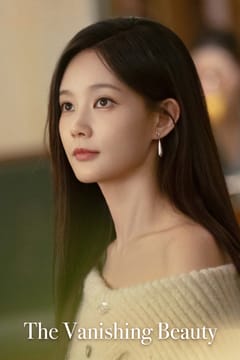 The Vanishing Beauty2026 · 28 eps
HE, BE, and OE
Fans borrowed three English abbreviations to describe how a story ends for its main couple. You'll find a short definition in our glossary entry on HE, BE, and OE.
- HE, Happy Ending: the leads are alive and together at the end.
- BE, Bad Ending: a sad ending. The leads are separated for good, or one of them doesn't survive.
- OE, Open Ending: the drama leaves the couple's future unclear, and viewers have to decide for themselves.
On C-Drama Compass, we use five labels: Happy Ending, Sad Ending, Open Ending, Bittersweet, and Happy (in extras). The exact definitions are on our How We Rate page.
Bittersweet endings
Many of the most talked-about Chinese dramas don't fit neatly into HE or BE. The leads may end up together only after paying a heavy price, such as years apart, a lost memory, or a sacrifice. Or they may part on peaceful terms, each choosing a different life. We call these endings bittersweet.
Bittersweet endings split audiences. Some viewers find them more honest and moving than a neat happy ending. Others feel the drama took away what it had promised. If you know you need a clean, happy finish, check the label first.
Are Chinese dramas really that sad?
Less often than their reputation suggests. Of the 37 completed dramas we had labeled in October 2026, 22 have a happy ending and 13 are bittersweet. Only one has a sad ending, and one is open. Our list leans toward popular recent dramas, so it isn't a sample of every Chinese drama, but outright tragedy is the exception there.
The reputation comes from a few genres. Xianxia and fantasy stories often deal with lovers from different realms, curses that span lifetimes, and duties that come before love. Those stories are built around sacrifice, and their source novels sometimes end in tragedy. Historical dramas based on real events can also be bound by history: if the real person's fate is known, the drama can't easily change it.
There's also a long tradition in Chinese storytelling of tragic romance, where a love story's power comes from what the characters lose. The best-known example is the Butterfly Lovers (梁山伯与祝英台), whose lovers are united only in death. Many fans seek out sad endings on purpose.
When the drama and the novel disagree
Many popular Chinese dramas are adapted from web novels, and adaptations often change the ending. Sometimes the drama is happier than the book. Sometimes it's the other way around. Changes can come from the need to fit a long novel into a set number of episodes, from audience expectations, or from content rules in China.
That's why our drama pages say whether the novel's ending differs from the drama's. That fact is revealed with the ending label, and the novel's actual ending sits behind the highest spoiler level.
Extras and special episodes
Some dramas release extra content after the finale: a bonus episode, a short special, or an alternate ending. These can change the picture. A drama whose main story ends sadly might give its couple a happy reunion in an official extra. We label those "Happy (in extras)." None of the dramas we track carries that label yet.
How to check an ending without spoilers
Our pages are built so you can find out as much or as little as you want.
- Ending type only. On every completed drama page, the ending label is hidden until you choose to reveal it. Revealing it tells you the type, such as Bittersweet, whether the novel ends differently, and whether our editor watched the ending or relied on sources.
- In brief. A short summary of how things stand for the main characters, in two to four sentences.
- Full ending explained. The complete ending, for viewers who want every detail or who have finished the show and want to compare notes.
You can set your preferred spoiler level once in the site header, and the site will remember it on your device. Our endings page lets you browse completed dramas by ending type without opening anything you don't want to see.
To try it, open one of these finished dramas. Nothing on this page gives away how they end:
 Hidden Love2023 · 25 eps
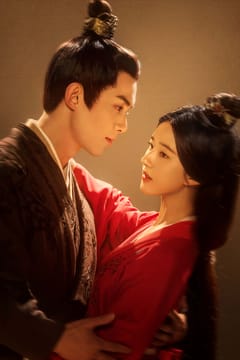 Love Like the Galaxy2022 · 56 eps
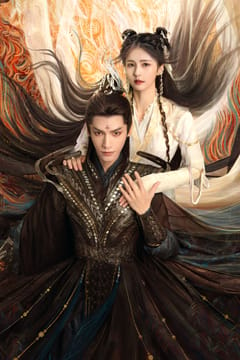 Till the End of the Moon2023 · 40 eps
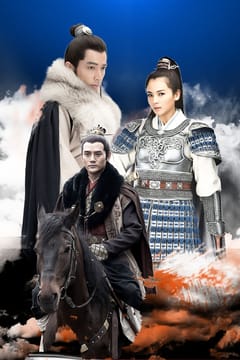 Nirvana in Fire2015 · 54 eps
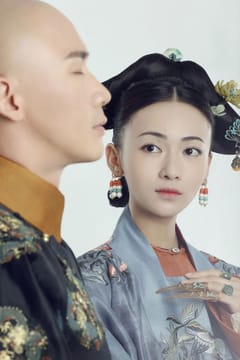 Story of Yanxi Palace2018 · 70 eps
 Go Go Squid!2019 · 41 eps
Disputed endings
Some endings are genuinely ambiguous, and fans still argue about them years later. When fans strongly disagree about which label fits, we mark the ending as disputed. After you finish a drama, you can vote on its page on whether you were happy with the ending, and the results appear once enough viewers have voted.
For more vocabulary that comes up in fan discussions, see our beginner's guide to C-drama terms.